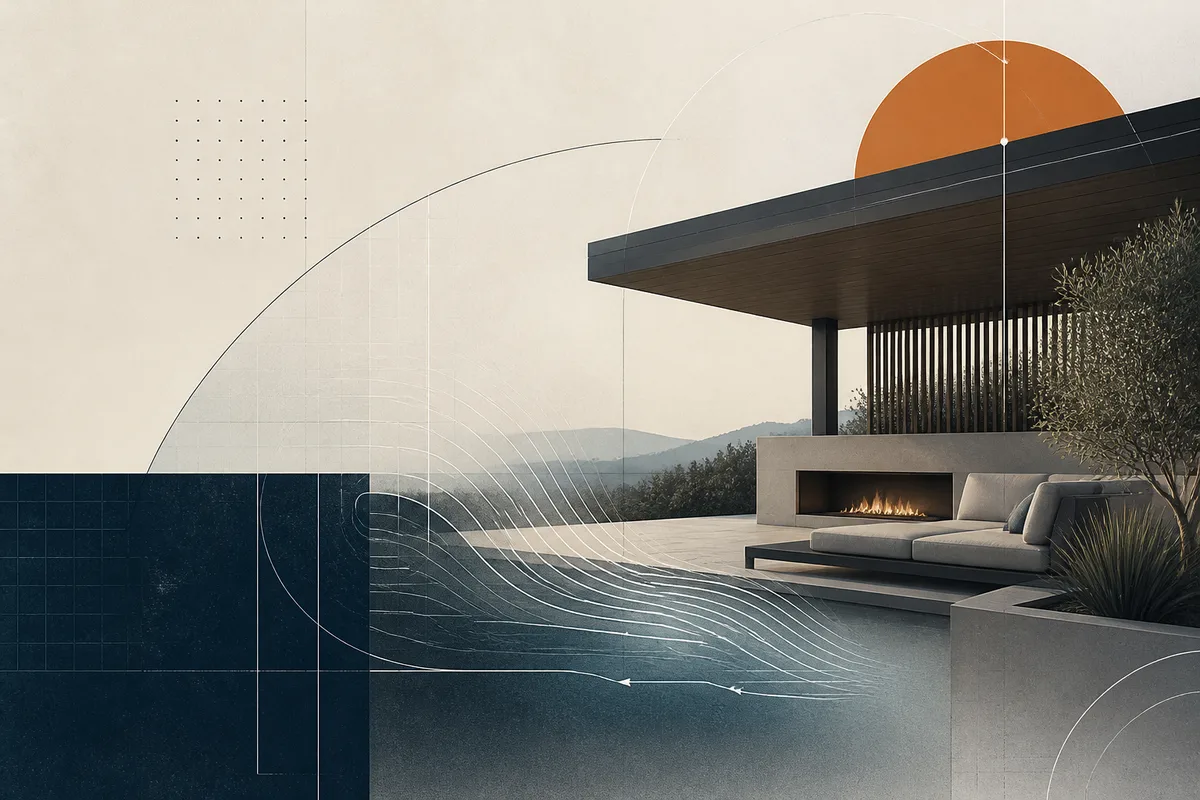
Balancing Thermal Control and Fluid Dynamics in Outdoor Living Spaces
Outdoor living in North Texas often feels like a battle against stagnant air. Many homeowners install perimeter enclosures to block the sun, only to find the space becomes warmer than the yard once the screens are lowered. This occurs because the material designed to provide shade also acts as a thermal barrier, disrupting the natural exit of hot air and creating a localized greenhouse effect.
Managing the intersection of patio screen airflow and heat retention requires more than just choosing a color. It demands an understanding of how air moves through woven filaments and how mesh density influences the stack effect—the movement of air resulting from differences in vertical pressure developed by thermal buoyancy. For residents in the Dallas metroplex, where 100-degree days are a recurring climatological reality, selecting the wrong mesh can turn a luxury porch into a heat trap.
Why Standard Mesh Selection Often Fails
Most solar screens are marketed based on "percentage of blockage," leading consumers to believe higher numbers always yield better results. This linear logic fails to account for the fluid dynamics of an enclosed space.
- High-density weaves (90%+) can reduce horizontal wind speed to nearly zero, preventing the "cross-breeze" necessary to displace humid air.
- Non-vented patio covers act as a lid, where trapped heat under patio covers radiates back down onto the occupants.
- Darker meshes absorb thermal energy and, without sufficient airflow, re-radiate that heat into the living area.
- Total enclosure without variable mesh heights prevents the "scavenging" effect where cooler air enters at the floor and pushes hot air out at the ceiling.
The Playbook for Optimized Outdoor Airflow
1Audit the Roofline Ventilation
Before selecting a mesh, identify where rising air is supposed to go. If a patio has a solid, insulated roof with no ridge vents or gable openings, the mesh must be more breathable to compensate for the lack of vertical exhaust. Spaces with vaulted, vented ceilings can typically handle a tighter weave because the heat has a natural upward escape path via thermal differences.
2Map Local Wind Patterns
In the North Texas area, prevailing winds often shift seasonally, with southerly flows dominating the warmer months. Position higher-airflow mesh on the windward side of the property to facilitate convective cooling outdoor spaces. This allows the breeze to penetrate the barrier while the solar-facing screens focus on UV rejection.
3Match Openness Factor to Solar Orientation
The "openness factor" refers to the weave's density. A 10% openness factor (90% blockage) is intended for west-facing walls during the late afternoon but may be too restrictive for a North-facing screen that receives no direct sun. Use a lower blockage percentage on non-solar sides to maximize the volume of air exchange.
4Implement Stratified Cooling
In a motorized configuration, users are not limited to "all or nothing." Raising the screens slightly off the floor creates an entry point for cooler air, while slightly lowering the top—if the track allows—or using a more breathable solar mesh helps the hot air cycle out. This utilizes the chimney effect within the patio footprint.
The Physics of Breathable Solar Mesh
The relationship between thread diameter and hole size dictates the thermal performance of a screen. A breathable solar mesh uses a specific geometry to break the wind's velocity while still allowing the molecular transfer of air. When air hits a screen, it creates a small pressure differential; if the mesh is too tight, the air moves around the structure rather than through it.
In high-heat environments like Highland Park, the goal is to maintain a "cooling degree" by ensuring the interior air is replaced regularly. If the mesh is too dense, the air stays static, and solar gain can lead to heat accumulation beneath the patio structure.
The percentage of open space in a screen weave that determines the ratio of light and air allowed to pass through the barrier.
How Motorized Screens of Dallas Helps
A professional installation involves evaluating the specific microclimate of a backyard, including nearby fence lines and prevailing wind blocks. The process begins with a site measurement that accounts for the height of the patio cover and the existing ventilation. For residents seeking Motorized Patio Screens, a typical scope of work includes selecting mesh types that balance the need for insect protection with the requirement for steady air movement through the envelope. Homeowners should prepare to discuss which hours of the day they use the space most, as this dictates whether the priority is morning glare or late-afternoon heat.
Frequently asked questions
Can a patio screen actually make my porch hotter?
Yes, if the mesh density is too high and there is no overhead ventilation, the screen acts as an insulator. This traps heat generated by thermal buoyancy, leading to a temperature increase compared to an unscreened space.
What is the best mesh for North Texas summers?
The ideal mesh depends on solar orientation and roof venting. Generally, a balance must be struck between blocking UV rays and allowing enough air to pass through to prevent the stack effect.
Does the color of the mesh affect airflow?
Color does not directly change the cubic feet per minute (CFM) of airflow, but it affects heat perception. Darker meshes provide better visibility and absorb heat at the surface, which requires higher airflow to dissipate, whereas lighter meshes reflect more energy but can create more glare.
How do I stop the "greenhouse effect" on my screened porch?
The most effective method is to ensure a cross-breeze by using meshes with appropriate openness factors on at least two sides of the enclosure. Additionally, keeping the screens retracted during the hottest part of the day when the space is not in use allows the structure to "breathe" and shed stored thermal energy.
Are motorized screens better for airflow than fixed screens?
Motorized versions offer a distinct advantage because they can be adjusted as the National Weather Service forecast changes. When temperatures are moderate, the screens can be fully retracted to allow 100% airflow, a flexibility that fixed screens do not provide.
Will a screen with high airflow still keep out mosquitoes?
Standard screen weaves provide pest control by creating a physical barrier. A breathable weave is usually sufficient for deterring common insects while still facilitating the passive movement of air through the building envelope.
What happens when you get in touch: you describe the situation, we ask the few questions that actually change the answer, and you get a clear scope and next step — no obligation.
Local note: Fort Worth/Dallas, TX Weather Forecast Office # Dallas/Fort Worth Climatology - Current Conditions - Observed Precipitation - Forecasts - Soaring Forecast | | |-| | 100° Day Records
- Summary (Dallas/Fort Worth Climatology - National Weather Service)