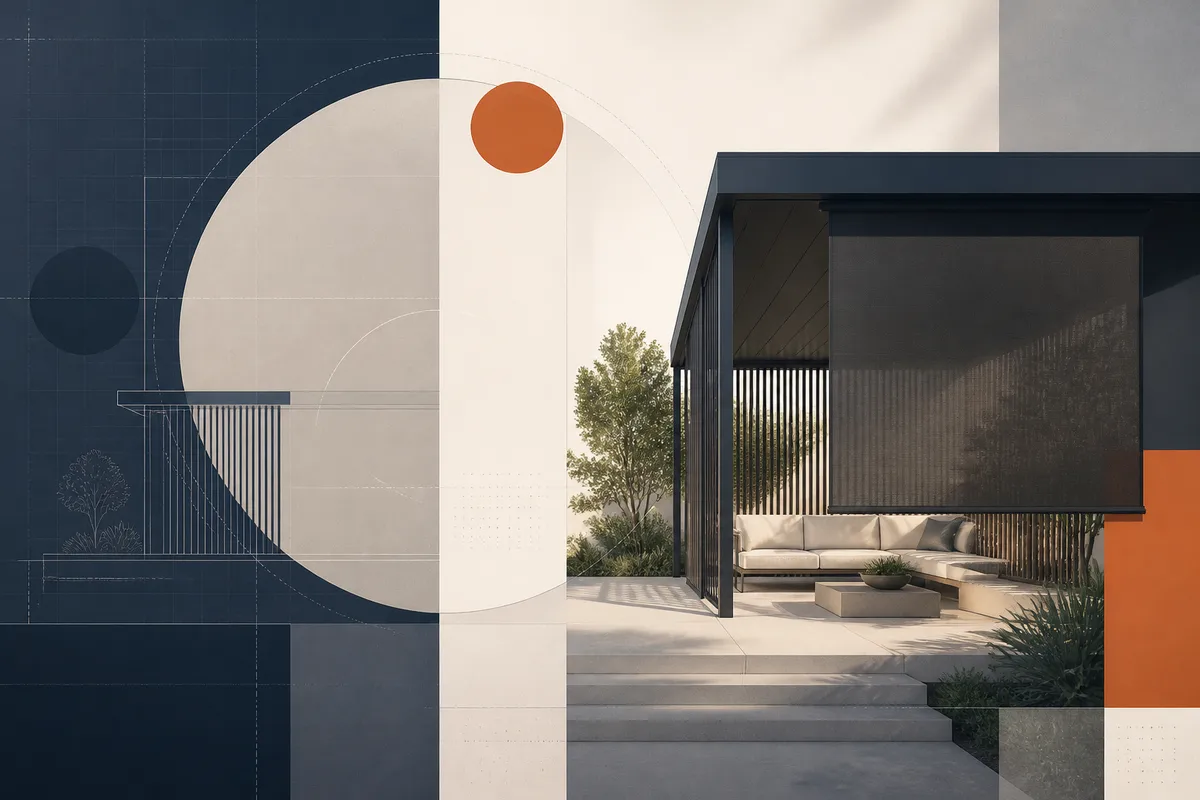
The Architectural Choice Between Hidden and Visible Outdoor Screens
Choosing between a recessed and surface-mounted screen system is rarely about function; both provide climate control and insect protection. In the luxury market, the decision is driven by the building envelope and the desired aesthetic finish. A recessed motorized screen installation creates a seamless transition between indoor and outdoor spaces, while surface mounts work within the constraints of finished architecture.
This analysis examines the structural requirements, aesthetic trade-offs, and mechanical considerations for homeowners and builders. Understanding the difference between a "hidden" track and a standard housing unit ensures that the final installation aligns with the property’s architectural intent.
Why Retrofit Projects Often Clash With Recessed Ambitions
Homeowners frequently request hidden screens for existing patios, but structural reality often dictates a different path. Attempting to hide components in a finished home requires invasive surgery on the building's exterior.
- Existing headers are rarely sized to provide the necessary internal clearance for a recessed roller without significant structural modification.
- Rerouting electrical lines through finished stone or brick columns significantly increases labor complexity and cost.
- Moisture barriers and flashing must be perfectly integrated to prevent water intrusion behind the newly hidden tracks.
- Finished ceiling heights may be lowered if a housing is tucked under an existing soffit rather than inside it; a recessed installation depends on ceiling depth, joist direction, and electrical access.
The Framework for Selecting an Installation Method
Selecting the right mounting style requires balancing the construction timeline with the long-term visual profile of the home.
1Evaluate the Construction Phase
Recessed systems are best executed during the framing phase of new construction or a total "down-to-the-studs" renovation. This allows the builder to design flush-mounted motorized screens directly into the home's structural plans. If the drywall or exterior cladding is already in place, a surface mount is generally the more practical and less destructive option.
2Determine Clearance and Headroom
A recessed housing sits inside a pocket, requiring vertical space above the opening. If the patio has low ceilings, a recessed pocket might interfere with structural beams or HVAC ducting. Surface-mounted housings sit on the face of the header, which preserves the full height of the opening but adds a visible metal box at the top. For comparison, a 7 1/8” housing is typically used for surface mount applications.
3Assess the Track Profile
Surface-mounted tracks are fastened to the face of columns or inside the door jamb, remaining visible even when the screen is retracted. Hidden tracks are installed inside the wall, creating a U-channel that the screen slides through without any protruding hardware. This is the gold standard for modern, minimalist architecture in areas like Highland Park.
4Plan for Maintenance Access
Even hidden screens require a path for service. A properly designed recessed installation must include an access flap or removable soffit panel. Without this, a simple motor adjustment or mesh replacement would require tearing out plaster or woodwork, turning a routine service call into a major repair.
The Mechanics of Hidden Pocket Integration
In a recessed setup, the screen’s roller tube is housed in a pre-constructed pocket, often made of wood or aluminum. This pocket must be perfectly level; even a slight tilt can cause the fabric to telescope or wrinkle as it descends. The side tracks must also be perfectly plumb to prevent the hem bar from sticking. Builders can follow a step-by-step guide for installing motorized drop-down setups to ensure proper ceiling recess and wiring.
For motorized patio screens, the electrical requirements are identical regardless of mounting style, but the wire routing differs. Recessed units hide all conduit within the wall cavity, while surface mounts may require color-matched wire covers if the power source is not directly behind the housing.
How Motorized Screens of Dallas Helps
Installation involves a technical site assessment to verify mounting substrates and wind exposure. For homeowners in the Dallas metroplex, this involves checking if the patio structure can support the weight of wide-span systems and determining the cleanest path for electrical integration. A detailed scope of work should include specific measurements for housing dimensions and a clear plan for how the tracks will interface with the floor surface. To start a project assessment, homeowners can visit the Highland Park service area page or call +12142037072.
Frequently asked questions
Can I hide the screen tracks in a brick or stone column?
Yes, but this typically requires the mason to leave a specific channel or "pocket" during the construction of the column. For existing stone columns, the tracks are usually surface-mounted or "in-set" against the stone, as cutting a precise channel into finished masonry is technically difficult and risks cracking the material.
Is there a price difference between recessed and surface mount?
While retractable screens are relatively easy to install, the total project cost for a recessed installation is higher due to the additional framing, drywall, or masonry work required. Surface mounting is faster and requires fewer trades, making it the more budget-friendly option for retrofits.
Which mounting style handles Dallas wind better?
Both styles are equally durable if anchored correctly. However, inside-mounted screens or recessed tracks can sometimes offer a tighter seal against the building, which helps minimize "blowouts" where the screen mesh is pushed out of the track during high-velocity gusts.
Does a recessed screen require a special type of motor?
The motor is generally the same, but the control system must be planned early. Because the motor is hidden inside a wall or ceiling pocket, you must ensure the wireless receiver is positioned where it can still pick up signals from remotes or smartphone bridges without interference from structural steel.
Can I use recessed screens on a pergola?
Recessing is difficult on pergolas unless they are custom-built with hollow, oversized beams designed to act as pockets. Most pergola installations utilize surface mounts where the housing is color-matched to the rafters to minimize its visual footprint.
How do I prepare my home for an estimate?
Know the dimensions of your openings and identify where your nearest electrical panel or outdoor outlet is located. If you are in the design phase of a new home in Collin County, have your architectural drawings ready so the installation team can coordinate pocket depths with your builder. Visit https://motorizedscreensdallas.com/ to submit your project details.
What happens when you get in touch: you describe the situation, we ask the few questions that actually change the answer, and you get a clear scope and next step — no obligation.