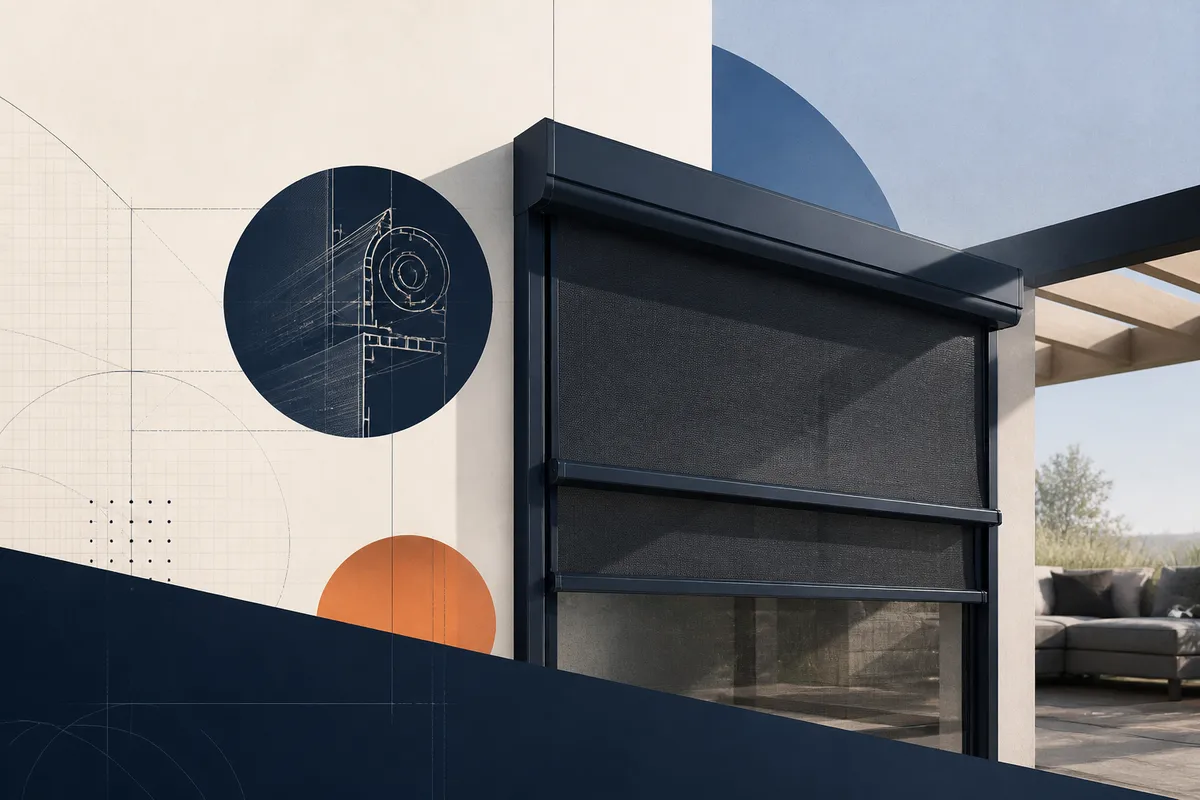
The Engineering of Dual-Track Motorized Screens for All-Day Utility
Homeowners often find that a single mesh type is insufficient for the radical swings in the North Texas climate. A screen optimized for morning airflow often fails to block the intense heat of a July afternoon, while a heavy solar fabric can make a patio feel claustrophobic during a temperate evening. The dual-track system solves this by housing two distinct fabrics that can be deployed independently based on real-time atmospheric conditions.
This article examines the mechanical configuration, housing requirements, and functional transitions of double-roller systems. It serves as a technical guide for property owners who need to balance visibility, insect protection, and thermal management within a single architectural footprint.
Why Single-Mesh Systems Fall Short in Variable Climates
Standard retractable screens involve a compromise between aperture size and thermal resistance. While a high-visibility mesh is excellent for keeping pests out, it does little to mitigate the rising temperatures typical of the region.
- High-airflow meshes lack the density required to provide privacy from neighboring properties in densely populated suburban developments.
- Dense solar fabrics often obstruct natural light and breezes during the cooler morning hours, rendering the patio less inviting.
- Single-motor setups limit the homeowner to one functional mode, forcing a choice between heat protection and ventilation.
- The New Climate Normals (1991-2020) for the Dallas/Fort Worth area show significant temperature variations that demand more than one type of environmental barrier.
The Architecture of a Dual-Track Installation
Implementing a dual-track motorized screens system is an exercise in precision clearance and load management. The system operates two separate rollers, meaning the physical footprint is larger than that of a standard unit. Each screen operates independently, so you can customize your coverage for both commercial and residential spaces.
1Verify Headbox Clearance
A dual-roller system requires a larger housing to accommodate the two independent fabric tubes. Before beginning, ensure the mounting surface or recessed pocket has the structural depth to conceal the double-track assembly without interfering with door swings or lighting fixtures.
2Match Mesh to Orientation
For patios with heavy western exposure, the secondary roller should be equipped with a high-density solar or privacy mesh. The primary roller typically carries a standard insect mesh that maintains good ventilation and visibility for use when the sun is not directly hitting the outdoor space.
3Account for Incremental Weight
Double-roller systems are significantly heavier than single-track versions due to the second roller and additional fabric tube. Structural headers must be inspected to ensure they can sustain the static and dynamic loads, particularly in areas with clay-heavy soils like the Trinity-Frio series in Dallas County which can cause foundation and framing shifts.
4Configure Independent Controls
The utility of a dual-track system lies in the ability to operate the screens separately. Programming should allow for "Solar Mode" (both screens up or just solar down) and "Insect Mode" (only the high-visibility mesh down) to ensure the system reacts correctly to changing light levels and environmental needs.
The Mechanics of Thermal and Privacy Transitions
The primary benefit of dual-track motorized screens is the ability to create a "conditioned" outdoor space without a permanent wall. In the morning, the insect mesh acts as a transparent barrier, allowing the patio to benefit from the relatively low humidity and cooler temperatures often recorded at Dallas Love Field.
As the sun moves, the homeowner can retract the insect mesh and deploy the solar or retractable privacy mesh. Double roller motorized screens for shade, privacy, and comfort increase privacy, reduce the sun's heat, and maintain good ventilation and visibility. Furthermore, Phantom's dual roller system can combine clear vinyl units with insect or solar mesh for ultimate comfort.
How Motorized Screens of Dallas Helps
Planning a dual-track installation involves coordinating electrical requirements and structural mounting points. Technical specialists can help verify if the existing architecture and power infrastructure are suitable for a double-roller configuration. Homeowners in Highland Park or surrounding neighborhoods should prepare to discuss their primary goals—whether that is total privacy or simple sun shading—so the fabric weights can be calibrated to the local architectural style.
Frequently asked questions
1. Can a dual-track system be retrofitted to an existing pergola?
Retrofitting depends entirely on the load-bearing capacity of the pergola's beams. Since a dual-track system carries two rollers, the beam must be able to support the increased weight and provide a flat surface for the wider dual-side tracks. A technical inspection of the existing structure is required to ensure safety.
2. Is it possible to use one remote for both screens?
Yes, multi-channel remotes are standard for these systems. Each screen is assigned to a specific channel, allowing the user to raise or lower them independently or sync them to move together. This is particularly useful for large Motorized Patio Screens that span multiple bays.
3. How do dual-track screens handle the wind?
While these systems are durable, they are not intended to be deployed during severe storms or high-wind events. The tension on the tracks and fabric can be significant, so it is recommended to retract screens when high gusts are expected to prevent damage to the mechanical components.
4. What is the maintenance difference between single and double rollers?
The maintenance is largely the same, but doubled in scope. Tracks must be kept clear of debris, and the fabrics should be cleaned periodically to prevent dust buildup. With two roller systems, it is important to ensure the electrical housing remains sealed and free of insect nesting, which can occur in the larger headboxes.
5. Can I mix a bug screen with a solid vinyl "weather" curtain?
This is a common configuration. These dual-purpose screens combine screens and transparent vinyl to provide privacy and protection from insects, weather, and sun. Clear weather separation allows for heat retention during the winter, while the second roller houses an insect mesh for the summer.
What happens when you get in touch: you describe the situation, we ask the few questions that actually change the answer, and you get a clear scope and next step — no obligation.