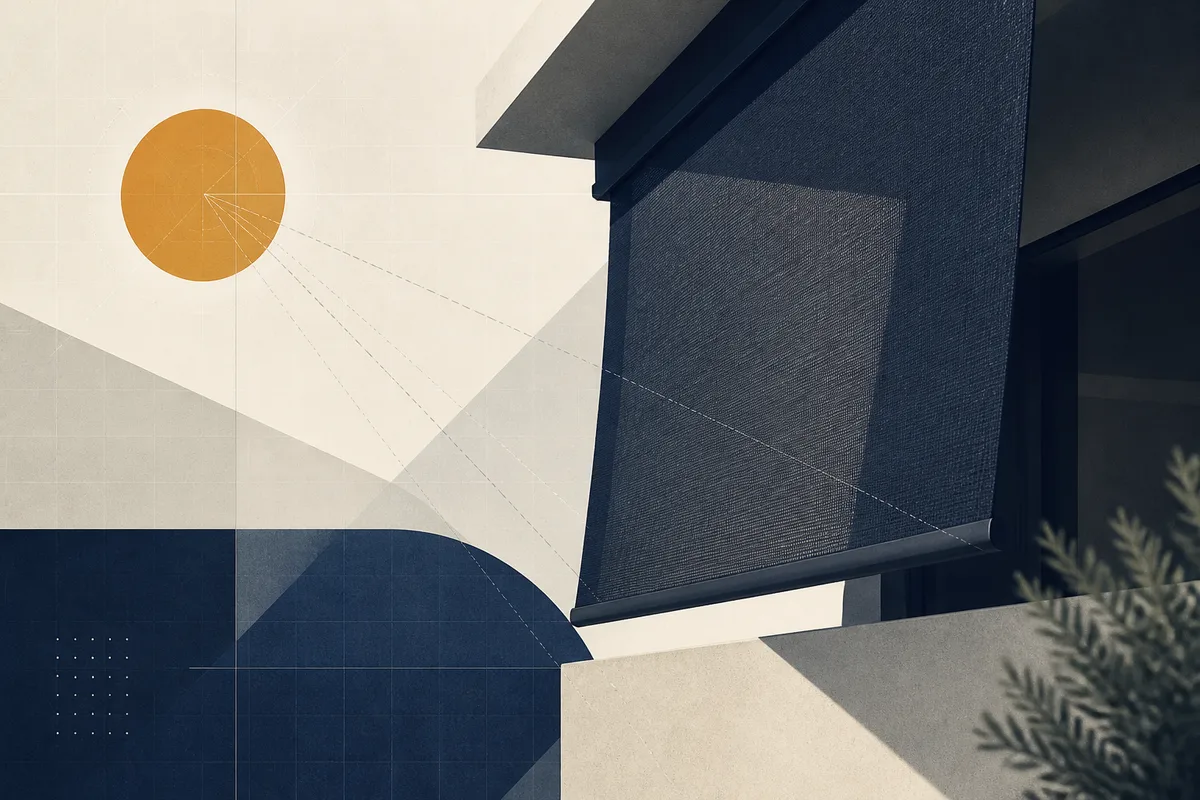
The Science of Solar Mesh Selection for Western Exposure
Most homeowners select patio screens based on visibility, only to discover that a "clear view" mesh fails to stop the crushing heat of a July afternoon. In a climate where the National Weather Service records high seasonal temperatures, the physics of solar radiation matters more than aesthetics. If the mesh is too open, the infrared energy passes through the fabric, heating the slab and furniture until the outdoor space becomes unusable.
This guide decodes the technical relationship between openness factors and thermal performance. It provides a decision matrix for properties in the Dallas metroplex, where western exposure creates a unique cooling challenge that standard insect screening cannot solve.
Why Western Exposure Defies Standard Screening Logic
A standard insect screen provides zero protection against solar heat gain, acting only as a physical barrier for pests. When the sun drops below the roofline in the late afternoon, the angle of incidence allows maximum radiation to penetrate vertical surfaces.
- Direct solar radiation at low angles carries higher thermal energy per square inch than midday sun filtered by a roof.
- High-openness meshes allow "light leakage," which creates significant glare on television screens and mobile devices.
- Darker fabric colors in low openness percentages actually improve outward visibility by reducing surface reflection.
- Convective cooling—the breeze you feel—is physically restricted by the same tight weave required to block heat.
The Openness Factor Decision Matrix
1The 1% Factor for Total Heat Block
This is a heavy-duty solution for west-facing patios with no afternoon shade. A 1% openness factor consists of a very tight weave where only 1% of the surface is "open," and this blocks 99% of UV rays according to northsolarscreen.com. Effectively turning a motorized patio screen into a thermal wall, this 1% factor offers maximum solar control and privacy. However, it provides the least amount of airflow and significantly dims the natural light in adjacent indoor rooms.
2The 3% Factor for Balanced Performance
A 3% mesh provides a technical middle ground for solar management. According to bocablinds.com, a 3% openness shade blocks 97% of incoming light. It provides a substantial reduction in solar heat gain while allowing enough light to prevent a "cave-like" feel on the porch. The visibility remains clear enough to see the backyard, providing a balance between sun protection and view.
3The 5% Factor for Visibility and Ventilation
At 5% openness, the focus shifts toward maintaining a breeze. A 5% fabric has about 5% open area and 95% solid material. This percentage is ideal for north or east-facing exposures where the sun is not a primary threat in the afternoon. It offers excellent insect protection and better airflow than denser options, though it will struggle to keep a patio cool once the sun hits the mesh directly.
4The 10% Factor for Maximum Airflow
This mesh is designed for homeowners whose primary concern is insects rather than heat. A 10% openness shade blocks 90% of incoming light and lets more light and air through than tighter weaves. While it maintains clearer views, it will not prevent the patio surface from heating up during direct western exposure, largely defeating the purpose of a solar control system in those conditions.
The fraction of incident solar radiation that actually passes through the screen material; lower numbers indicate better heat rejection.
The Interplay of Color and Physics
The effectiveness of a solar mesh isn't just about the holes in the weave; it is also about how the material handles light. Darker colors (black, bronze, charcoal) absorb light and reduce glare, making it much easier to see through the mesh to the outside landscape. Lighter colors (white, tan, grey) reflect more light, which provides better daytime privacy because people cannot see in, but it also creates a "shimmer" effect that obscures the view from the inside looking out.
When dealing with the intense light levels documented by the National Weather Service, a dark 3% or 5% mesh typically provides the best visual experience. The dark threads absorb the sun's rays, allowing the eye to focus on the objects behind the screen rather than the screen itself.
How Motorized Screens of Dallas helps
Designing a functional outdoor space requires an objective assessment of the sun’s path and the prevailing wind directions. A professional site evaluation typically involves measuring the dimensions of the openings, identifying power sources for motorization, and determining which elevations require maximum heat rejection versus maximum ventilation. Homeowners should prepare by noting which hours of the day their patio is currently unusable due to heat. A sound scope of work for a Highland Park installation should include a discussion on how different mesh percentages will impact the interior lighting of the home and which control systems best suit the property's orientation. Common control options include manual remotes, smartphone integration, or weather-responsive sensors. For an assessment of your specific exposure, contact the team at (214) 203-7072.
Practical considerations during an installation include assessing the existing structure for mounting stability and ensuring the track system is perfectly plumb to prevent fabric bunching. Installers also calibrate the motor limits so the screen seals tightly against the floor, ensuring the chosen openness factor performs its thermal job without gaps.
Frequently asked questions
Can I use different openness factors on different sides of the same patio?
Yes, and this is often an efficient approach. A western side can utilize a 1% or 3% mesh to combat the setting sun, while the northern or eastern sides can use a 5% or 10% mesh to maintain airflow and views.
Does a lower openness factor provide better insect protection?
While all solar meshes from 1% to 10% are effective at blocking common flies and mosquitoes, the tighter weaves of 1% and 3% are significantly better at stopping smaller pests. However, the primary reason to choose a lower percentage is heat control, not pest control.
Will a 1% solar mesh make my patio completely dark?
It will not be pitch black, but it will significantly reduce the ambient light levels. It is comparable to wearing a very dark pair of sunglasses; you can still see clearly, but the "brightness" of the day is heavily muted, which is often desirable during peak summer hours.
How does wind affect these different mesh types?
Dense meshes (1% and 3%) approach a solid surface and act more like a sail than open meshes. To protect the investment, motorized systems can be equipped with sensors that retract the screens when wind speeds increase to prevent damage to the tracks or the fabric.
Can solar screens help reduce my indoor cooling costs?
When installed over windows or large glass sliding doors, solar screens block heat before it ever hits the glass. By blocking more sun and reducing the thermal load on the building envelope, the interior HVAC system does not have to work as hard to maintain set temperatures during extreme heat events.
What happens when you get in touch: you describe the situation, we ask the few questions that actually change the answer, and you get a clear scope and next step — no obligation.